For animal owners
Vomiting in Cats: What to Do and When to Seek Urgent Veterinary Care
How to assess urgency when a cat vomits, what can be done safely at home, what to avoid, and what diagnostic tests may be needed.
Audio
Vomiting in cats: when help is needed
A Russian-language audio recording related to this article.
If you do not have time to read
A single episode of vomiting in an otherwise active cat does not always indicate a dangerous disease. Brief observation may be reasonable if the cat behaves normally, keeps water down, remains interested in food, and has no pain, blood, diarrhoea, or other warning signs [1-3].
Seek urgent in-person veterinary care if:
- the cat vomits several times in succession;
- the cat cannot keep water down;
- there is blood in the vomit or the stool is black and tarry;
- the cat suddenly becomes markedly lethargic, appears to be in severe pain, or develops abdominal enlargement;
- seizures, loss of coordination, or loss of consciousness occur;
- poisoning is suspected;
- the cat may have swallowed string, a needle, cord, tinsel, or another foreign object [1-7].
The threshold for seeking care should be lower for kittens, older cats, and cats with chronic disease. Repeated vomiting, refusal of water or food, or deterioration requires more prompt veterinary assessment [14].
This material is intended to inform animal owners and does not replace veterinary assessment of an individual patient. If warning signs are present, do not wait for an online response—seek in-person veterinary care.
How to assess urgency
The situation can be divided into three practical levels. This is not a diagnostic scale; it is a way to judge how quickly help may be needed.
Brief observation may be reasonable
Observation may be reasonable only if all of the following apply:
- vomiting occurred once;
- the cat is active and responds normally to the owner;
- the cat drinks and keeps water down;
- the cat remains interested in food;
- there is no pain, blood, diarrhoea, or another warning sign.
Observe the cat closely over the next few hours. If vomiting recurs or another sign appears, further waiting is not appropriate [1-3].
Advice or an examination is needed soon
Do not delay seeking advice if:
- vomiting recurs;
- appetite decreases;
- mild lethargy develops;
- diarrhoea occurs;
- the cat starts hiding or behaving unusually;
- the sign persists even without rapid deterioration.
Repeated vomiting together with lethargy, reduced appetite, pain, diarrhoea, or signs of dehydration requires veterinary assessment [1-3].
Urgent in-person care is needed
Urgent care is required for repeated vomiting, inability to keep water down, blood, marked pain, abdominal enlargement, altered consciousness, or suspected ingestion of a foreign object or toxin [1, 5-7].
The threshold for seeking care should be lower for kittens, older cats, and cats with chronic disease. Repeated vomiting, refusal of water or food, or deterioration requires more prompt veterinary assessment [14].

What can be done safely at home before seeking care
Before a consultation or examination, an owner can collect useful information and reduce the risk of additional problems.
- Assess the cat’s general condition, including activity, response to you, breathing, gait, and posture.
- Count the vomiting episodes and record their times and the intervals between them.
- Check whether the cat keeps water down. If vomiting follows drinking, continued observation at home may be unsafe.
- Take a photograph of the vomit or a video of the episode. Video may help distinguish vomiting from regurgitation [2, 19].
- Record the relation to feeding: when the cat last ate and whether the episode occurred immediately after eating or several hours later.
- Check whether the cat has passed urine and stool and note any marked changes.
- Inspect the environment for possible access to string, needles, tinsel, plants, medicines, household chemicals, or spoiled food.
- If poisoning or an adverse reaction to food or medicine is suspected, retain the packaging. The substance name, ingredients, and estimated amount help with risk assessment [7, 13].
- Do not force-feed the cat or force it to drink.
- Seek help if vomiting recurs or the condition worsens.
There is no universal home treatment that safely stops vomiting in every cat. Vomiting may be associated with gastrointestinal disease, a foreign object, kidney or liver disease, pancreatitis, toxins, infection, and other conditions [1-3].
What not to do
Before veterinary examination, do not:
- give human medicines;
- independently use antiemetics, antibiotics, or adsorbents;
- attempt to induce vomiting;
- force-feed the cat or force it to drink;
- use treatment regimens found online or in comments;
- continue to wait if the condition is worsening.
Do not try to induce vomiting at home after possible poisoning. Hydrogen peroxide is not recommended for inducing vomiting in cats, and other home methods may also be dangerous [8].
Do not pull on string, cord, or tinsel if it is visible from the mouth or anus. A linear foreign body may become anchored under the tongue or within the gastrointestinal tract, bunch the intestine, and damage the intestinal wall. Attempting removal at home can worsen the injury [5, 6].
Intestinal obstruction can compromise blood supply, leading to tissue necrosis, perforation, peritonitis, and shock. The timing of veterinary care matters in these cases [5].
How to prepare for veterinary care
Prepare:
- the cat’s age and approximate body weight;
- information about chronic conditions;
- a list of current medicines;
- the food name and time of the last meal;
- the time of the first episode and the total number of episodes;
- the relationship of vomiting to food or water;
- a description, photograph, or video of the episode;
- information about urination and stool;
- possible access to string, plants, medicines, household chemicals, or other hazards;
- previous laboratory reports, ultrasound or radiography reports, and clinic discharge summaries, if available.
Investigation of vomiting begins with a detailed history and physical examination. The veterinarian needs to know the duration and frequency of episodes, diet, accompanying signs, possible toxin exposure, and the likelihood of foreign-object ingestion [1-4].
What vomiting means and how it differs from regurgitation
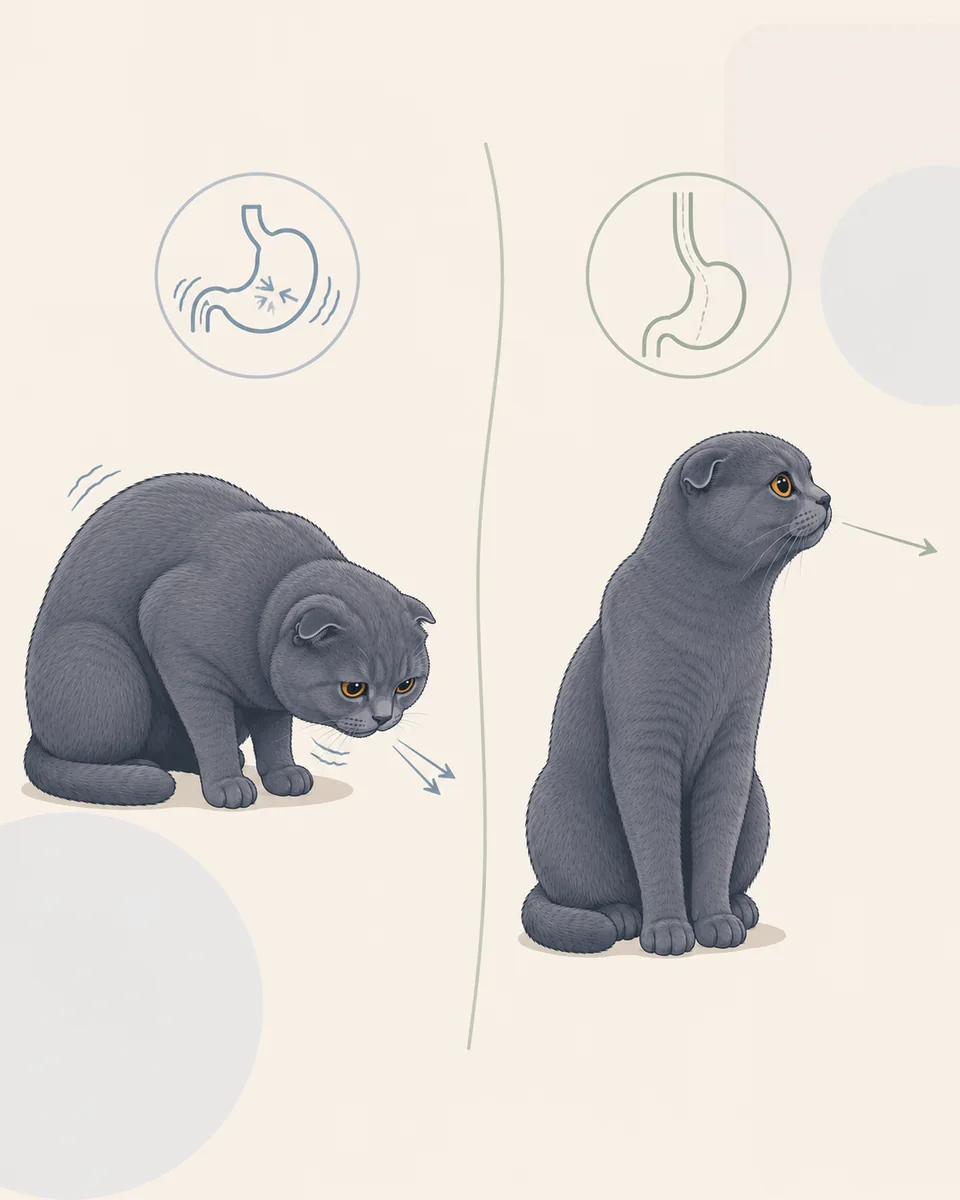
Vomiting is a sign rather than a disease in itself. It is the active expulsion of contents from the stomach and upper small intestine through the mouth. It is commonly preceded by restlessness, lip licking, salivation, repeated swallowing, and retching [2].
The cause cannot be established reliably from one episode. The veterinarian’s task is to assess the cat’s general condition, identify possible complications, and investigate the cause.
With vomiting
Common features include:
- nausea and salivation;
- repeated swallowing;
- restlessness and retching;
- abdominal contractions;
- active expulsion of contents [2].
With regurgitation
Material is expelled passively without marked abdominal contractions, often soon after eating. Regurgitation may accompany oesophageal disease or swallowing disorders [19].
It can be difficult to distinguish vomiting from regurgitation from a verbal description alone. A video may help the veterinarian identify the type of episode more accurately.
Possible causes of vomiting
Vomiting in cats has many possible causes. The colour, smell, or contents of vomit cannot reliably establish a diagnosis. The history, examination findings, and, when needed, laboratory and imaging results are considered together [1-4].
Food and hair
Vomiting may be associated with eating too quickly, overeating, an abrupt diet change, unfamiliar food, spoiled food, or an adverse reaction to food [1-3].
Cats swallow hair while grooming. Hair can accumulate in the stomach and form a trichobezoar. An occasional expelled hairball may have no lasting consequences, but repeated episodes should not automatically be considered normal: they may be associated with excessive grooming or gastrointestinal disease. A large hair mass can cause intestinal obstruction [9].
Food or hair should not be assumed to be the only cause, especially if vomiting recurs or is accompanied by lethargy, reduced appetite, diarrhoea, weight loss, or other signs.
Diseases of the stomach and intestine
Vomiting can occur with gastritis, inflammatory bowel disease, constipation, motility disorders, intestinal obstruction, neoplasia, and other chronic gastrointestinal diseases [1-3, 10].
With inflammatory bowel disease, vomiting may occur together with weight loss, diarrhoea, reduced appetite, lethargy, or blood in the stool [10].
Foreign objects
Particularly dangerous objects include string, needles, cord, tinsel, elastic bands, small toys, and fragments of packaging.
A foreign object may partially or completely block the gastrointestinal tract. Linear objects can become anchored under the tongue or within the gastrointestinal tract, bunch the intestine, and damage its wall [5, 6]. Veterinary evaluation is required if foreign-object ingestion is suspected.
Toxic, infectious, and parasitic causes
Vomiting may be caused by household chemicals, human and veterinary medicines, toxic plants, insect-control products, some foods, and accidentally ingested chemicals [7, 12, 13].
If poisoning is suspected, contact a veterinarian as soon as possible. Retain the packaging, substance name, and information about the estimated amount [7].
Some infectious and parasitic diseases can also cause vomiting. Other signs may include diarrhoea, fever, lethargy, reduced appetite, weight loss, and dehydration [1-3, 18]. Clinical signs alone are not sufficient to identify a particular pathogen.
Internal disease and reactions to medicines
Vomiting occurs with diseases of the kidneys, liver and gallbladder, pancreas, endocrine system, and nervous system [1-3]. A gastrointestinal sign may sometimes be the first visible indication of systemic disease.
Some medicines can cause nausea, vomiting, or gastrointestinal irritation as an adverse reaction [1-3].
Do not change the treatment regimen on your own. If an adverse reaction is suspected, contact the veterinarian who prescribed the medicine; sudden deterioration requires urgent care. Provide the medicine name, dose, time it was last given, time the signs began, and details of other products the cat receives.
Suspected overdose or accidental ingestion of a human medicine requires urgent veterinary care.
How a veterinarian investigates the cause
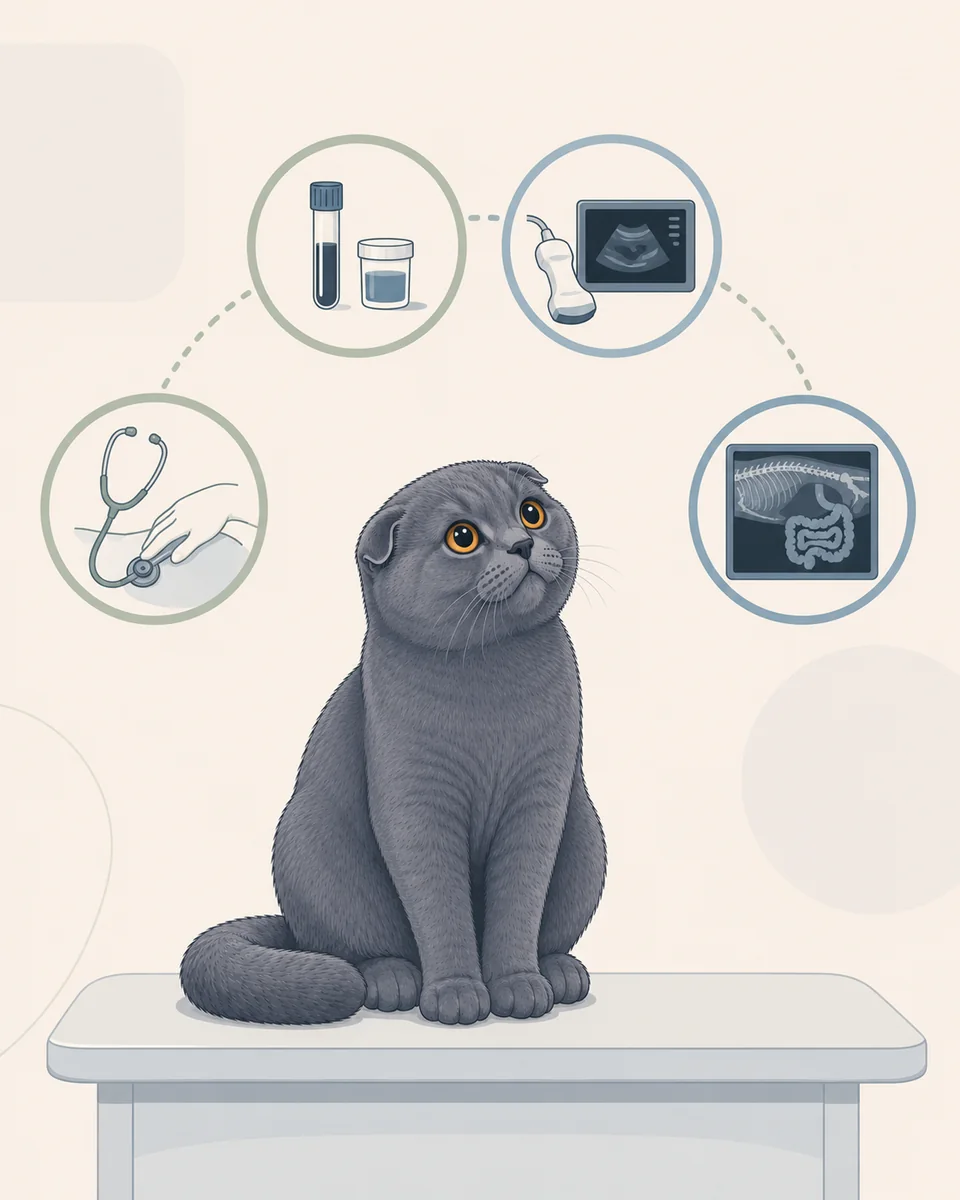
Investigation begins with a detailed history and physical examination.
The veterinarian will need to know:
- when vomiting began and how many episodes occurred;
- whether it is related to food or water;
- whether appetite, stool, or urination changed;
- whether the cat might have swallowed a foreign object;
- whether medicines, plants, or household chemicals were accessible;
- whether the cat receives any medicines;
- whether chronic conditions are present.
The examination assesses general condition, body temperature, heart and respiratory rates, signs of dehydration, mucous membrane colour and moisture, abdominal pain or tension, body weight, and evidence of systemic disease [1, 4].
If obstruction is suspected, examination of the mouth, abdominal palpation, and assessment for pain or gastrointestinal distension are particularly important [5].
Not every cat requires the same set of investigations. Selection depends on age, general condition, duration of signs, concurrent disease, and initial examination findings [1-4].
Which diagnostic tests may be needed
There is no mandatory test panel for every cat that vomits. Tests are selected for the individual patient [1, 4].
Blood tests and electrolytes
A complete blood count can help assess evidence of inflammation, anaemia, changes in blood-cell numbers, some indirect evidence of dehydration, and possible consequences of blood loss or systemic disease [4].
Biochemistry is used to assess kidney function, the liver, glucose and protein concentrations, metabolic disturbances, and changes associated with internal disease [1-4].
Repeated vomiting can cause fluid loss, electrolyte abnormalities, and acid-base disturbances. In a severely affected patient, electrolyte measurement helps guide fluid therapy [4, 5].
None of these tests alone usually establishes the specific cause of vomiting.
Urinalysis, faecal testing, and T4
Urinalysis can provide additional information about kidney function, the ability of the kidneys to concentrate urine, possible diabetes mellitus, and some metabolic and systemic disorders. Together with examination findings and other data, it contributes to assessment of hydration status [4].
Faecal testing may be needed if intestinal parasites, certain infectious or chronic gastrointestinal diseases, or vomiting together with diarrhoea or weight loss are suspected [1, 4].
In middle-aged and older cats, the veterinarian may recommend measurement of total thyroxine, or T4. Hyperthyroidism may be accompanied by weight loss, appetite changes, restlessness, increased thirst, a rapid heart rate, diarrhoea, or vomiting [20].
Ultrasound and radiography
Abdominal ultrasound can assess the stomach and intestine, liver and gallbladder, pancreas, kidneys, lymph nodes, free abdominal fluid, wall thickness and structure, and some evidence of inflammation, a foreign object, obstruction, or a mass [1, 4].
Radiography may be recommended if intestinal obstruction, a foreign object, distension of the stomach or intestine, gas accumulation, altered organ size, or another serious abdominal change is suspected [1, 4, 5].
Some foreign objects are readily visible on radiographs. String, fabric, plastic, and various other materials may not be seen directly. In those cases, indirect evidence is assessed and ultrasound, contrast studies, endoscopy, or other methods may be used [5].
Imaging findings are interpreted alongside the history, physical examination, and laboratory data.
Additional investigations
In some cases, additional laboratory tests, infectious-disease tests, pancreatic-function tests, cytology, endoscopy, biopsy, computed tomography, or exploratory surgery may be needed.
Endoscopy allows examination of the inner surface of the oesophagus, stomach, and first part of the small intestine, tissue sampling, and, in some cases, removal of a foreign object [2, 5].
A normal result from one test does not exclude every possible disease. Conclusions are based on all available findings.
How treatment is approached
There is no single treatment regimen for vomiting. Management depends on the suspected or established cause, degree of dehydration, frequency of vomiting, age, concurrent disease, and investigation results.
Treatment may include:
- fluid replacement;
- correction of electrolyte and acid-base disturbances;
- control of nausea and vomiting;
- pain relief when indicated;
- nutritional support;
- treatment of the underlying disease;
- removal of a foreign object or surgery;
- inpatient monitoring [2, 5].
Antiemetic treatment may make the cat more comfortable but does not replace investigation of the cause. With obstruction, a foreign object, perforation, poisoning, or severe systemic disease, temporary suppression of vomiting does not resolve the underlying problem [5].
Nutrition during treatment
The feeding plan is selected individually according to the cause of vomiting, duration of reduced food intake, and the cat’s general condition.
Depending on the situation, this may involve small portions of an appropriate diet, a highly digestible therapeutic diet, enteral feeding through a tube, or parenteral nutrition in selected severe cases.
Force-feeding may increase stress, create food aversion, and risk aspiration. Prolonged fasting can also be unsafe for cats. The duration of any food restriction and the method of restarting nutrition should be determined by a veterinarian.
When a foreign object must be removed
Depending on the object’s location, shape, and size, management may involve endoscopic removal, surgery, or monitored observation in selected cases.
With intestinal obstruction, dehydration and electrolyte and acid-base abnormalities are corrected before anaesthesia and surgery when possible [5]. Surgery may be required if the object is in the intestine or cannot be removed safely by endoscopy.
Where care is best provided
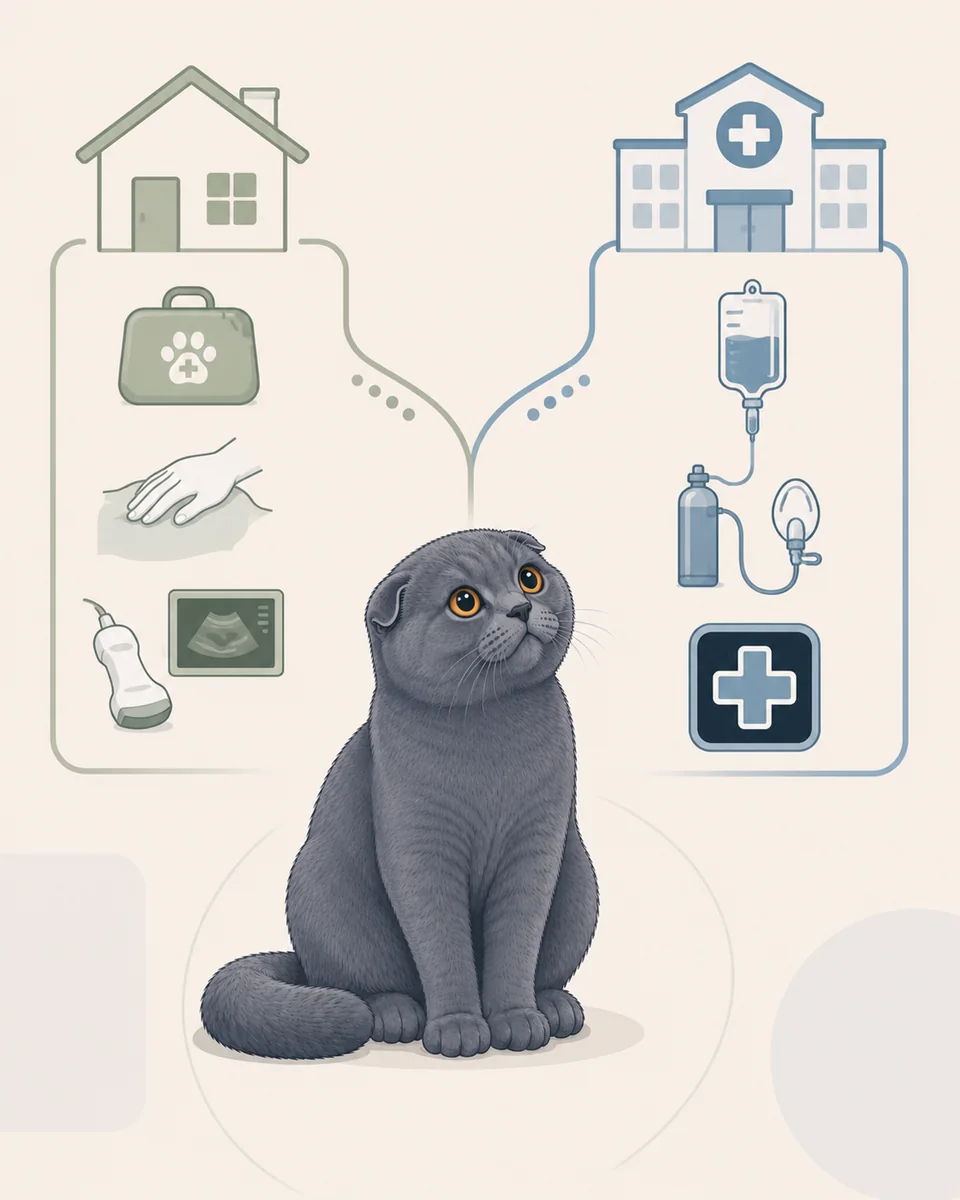
The appropriate setting depends primarily on the cat’s condition, the suspected cause, and the medical resources required.
When a home visit may be appropriate
A home visit may be considered when the cat is relatively stable and the necessary diagnostic or treatment procedures can be performed safely outside a clinic.
Depending on the clinician’s equipment, a home visit may allow history taking, physical examination, assessment for signs of dehydration, measurement of basic parameters, sample collection, ultrasound, initial symptomatic care, and a decision about further investigation or hospitalisation.
Transport, an unfamiliar environment, and handling can cause stress in cats. AAFP and ISFM guidance includes measures to reduce fear and distress during veterinary visits [15]. A home setting avoids some of these factors, but it is not suitable for every patient.
When a clinic is needed
Direct presentation to a clinic is preferable when the cat is unstable or may need:
- continuous monitoring;
- intravenous fluid therapy or intensive care;
- oxygen support;
- repeated testing;
- emergency surgery or endoscopic foreign-object removal;
- transfusion of blood components;
- round-the-clock observation;
- equipment unavailable during a home visit.
Suspected intestinal obstruction may require urgent imaging, stabilisation, correction of fluid and electrolyte disturbances, endoscopy, or surgery [5].
Severe dehydration, altered consciousness, marked weakness, respiratory compromise, or signs of shock require a setting where continuous monitoring and intensive care are available.
How an online consultation may help
If the cat is relatively stable, a remote discussion may help review the signs and their progression, assess urgency, examine photographs or videos, prepare for in-person care, seek a second opinion, and discuss existing test results.
A remote format can be an additional tool, but it does not replace physical examination or procedures. It cannot provide abdominal palpation, objective assessment of dehydration, sample collection, ultrasound or radiography, fluid therapy, or surgery [16, 17].
With repeated vomiting, inability to keep water down, marked lethargy, pain, blood, or suspected ingestion of a foreign object or toxin, an online consultation must not delay in-person care.
Prevention
The risk of vomiting cannot be eliminated completely, but some causes can be made less likely:
- keep string, needles, tinsel, elastic bands, and small objects out of reach;
- store medicines and household chemicals securely;
- check whether houseplants and cut flowers are toxic to cats;
- change diets gradually;
- do not feed spoiled or questionable food;
- do not give human medicines without veterinary direction;
- use an individual parasite-prevention plan;
- arrange preventive examinations appropriate to the cat’s age, lifestyle, and health.
If vomiting, including vomiting of hairballs, occurs regularly, it should not be dismissed as an individual trait. Frequent episodes can indicate disease and require veterinary assessment [1-3, 9].
Frequently asked questions
Why is my cat vomiting yellow fluid?
Yellow or yellow-green fluid may contain bile. It can appear after the stomach has emptied, but the colour of vomit does not identify a specific cause [11].
The frequency of episodes, appetite, activity, pain, diarrhoea, ability to keep water down, and other signs matter. If vomiting recurs or the cat feels worse, veterinary assessment is needed.
Why is my cat vomiting foam?
Foam can appear when only a small amount of fluid, mucus, and stomach contents remains. Yellowish foam may contain bile [11].
This is a nonspecific sign. Foam alone cannot distinguish temporary gastric irritation from a foreign object, poisoning, inflammatory disease, or systemic disease.
Why does my cat vomit after eating?
Possible causes include eating too quickly, overeating, an abrupt diet change, an adverse reaction to food, oesophageal disease, inflammatory disease of the stomach or intestine, motility disorders, and partial obstruction [1-3, 19].
If food is expelled passively soon after eating without marked abdominal contractions, the episode may be regurgitation rather than vomiting.
Is vomiting hairballs normal?
Cats swallow hair while grooming, and hair may sometimes be expelled from the stomach as a trichobezoar.
Regular vomiting of hairballs should not automatically be considered normal. Frequent episodes may be associated with excessive grooming or gastrointestinal disease, and a large hair mass can cause obstruction [9].
What should I do if my cat is vomiting and not eating?
Vomiting together with refusal of food needs careful assessment, especially if vomiting recurs, the cat is lethargic, cannot keep water down, develops diarrhoea or pain, has changes in urination, or continues to deteriorate.
Vomiting with reduced appetite can occur with gastrointestinal, kidney, liver, or pancreatic disease, infection, poisoning, and intestinal obstruction [1-5].
Do not force-feed the cat or give medicines without veterinary direction. Seek veterinary care for repeated vomiting or marked refusal of food.
What can I give my cat for vomiting?
There is no single medicine that is safe for every cause. Treatment depends on the underlying problem. Antiemetic treatment may be appropriate in some situations, but it does not remove a foreign object, resolve intestinal obstruction or poisoning, or treat severe internal disease [2, 5].
Do not give human antiemetics, antibiotics, painkillers, adsorbents, or other medicines without veterinary direction.
When does vomiting in a kitten require urgent care?
Fluid loss and refusal of food can cause kittens to deteriorate more quickly. Prompt care is required if vomiting recurs, marked lethargy develops, appetite is absent, water cannot be kept down, diarrhoea occurs, or coordination changes or seizures develop.
Vomiting, diarrhoea, refusal of food, and marked weakness are particularly dangerous in an unvaccinated kitten. This combination can occur with feline panleukopenia, which may cause severe dehydration and can be life-threatening [18].
Key points to remember
Vomiting is a sign rather than a disease. A single episode in an otherwise active cat does not always require emergency care. Repeated vomiting, inability to keep water down, blood, marked lethargy, pain, or suspected ingestion of a foreign object or toxin requires veterinary assessment [1-7].
Before seeking care, it is useful to assess the cat’s general condition, count the episodes, take a photograph or video, record the relation to feeding, check urination and stool, and remove access to possible hazards.
Do not give medicines on your own or force the cat to eat or drink. The appearance of vomit cannot reliably establish a diagnosis. Treatment should address the cause rather than only suppress the sign temporarily.
Useful resources
- When a pet needs urgent veterinary care
- How to prepare for an online veterinary consultation
- How to read pet lab results without self-diagnosis
If the cat is stable and you need help reviewing available information or identifying the next step, you can submit an online consultation application. Submitting an application does not mean that the case has been accepted automatically.
Sources
- Cornell Feline Health Center. Vomiting. Cornell University College of Veterinary Medicine. Accessed 10 July 2026.
- Webb C. B. Vomiting in Cats. MSD Veterinary Manual. Accessed 10 July 2026.
- VCA Animal Hospitals. Vomiting in Cats. Accessed 10 July 2026.
- VCA Animal Hospitals. Testing for Vomiting. Accessed 10 July 2026.
- MSD Veterinary Manual. Gastrointestinal Obstruction in Small Animals. Accessed 10 July 2026.
- VCA Animal Hospitals. Linear Foreign Body in Cats. Accessed 10 July 2026.
- ASPCA Animal Poison Control Center. ASPCA Poison Control. Accessed 10 July 2026.
- MSD Veterinary Manual. Emetic Drugs. Accessed 10 July 2026.
- Cornell Feline Health Center. The Danger of Hairballs. Cornell University College of Veterinary Medicine. Accessed 10 July 2026.
- Cornell Feline Health Center. Inflammatory Bowel Disease. Cornell University College of Veterinary Medicine. Accessed 10 July 2026.
- VCA Animal Hospitals. Gastroenteritis in Cats. Accessed 10 July 2026.
- ASPCA Animal Poison Control Center. Toxic and Non-Toxic Plant List — Cats. Accessed 10 July 2026.
- Cornell Feline Health Center. Common Cat Hazards. Cornell University College of Veterinary Medicine. Accessed 10 July 2026.
- Quimby J., Gowland S., Carney H. C. et al. 2021 AAHA/AAFP Feline Life Stage Guidelines. Journal of Feline Medicine and Surgery. 2021;23(3):211-233. Accessed 10 July 2026.
- Rodan I., Dowgray N., Carney H. C. et al. 2022 AAFP/ISFM Cat Friendly Veterinary Interaction Guidelines: Approach and Handling Techniques. Journal of Feline Medicine and Surgery. 2022;24(11):1093-1132. Accessed 10 July 2026.
- American Veterinary Medical Association. AVMA Guidelines for the Use of Telehealth in Veterinary Practice. 2021. Accessed 10 July 2026.
- American Veterinary Medical Association. Veterinary Telehealth: The Basics. Accessed 10 July 2026.
- Stuetzer B., Hartmann K. Feline Panleukopenia. MSD Veterinary Manual. Accessed 10 July 2026.
- MSD Veterinary Manual. Disorders of the Esophagus in Cats. Accessed 10 July 2026.
- Cornell University College of Veterinary Medicine. Feline Hyperthyroidism. Accessed 10 July 2026.